How the work tends to go

Casework

Everything below is a composite. We build these from patterns we see repeatedly — the situations, the programming decisions and the trade-offs are real, the people are not individually identified and no client names, photographs or numbers from private records are used.

Back to lifting after two years of nothing but walking

Foundations → Strength Block · 16 weeks · 2 sessions a week

Where it started

Evening walks had been the only training for two years. They were regular, often forty minutes, and they kept the week feeling civilised. There had been a gym habit before that, then a job change, then a long stretch where the idea of a barbell felt like belonging to another life. Mornings were stiff through the hips. The commute was a seated one. Dinner was late. Nothing hurt in a way that needed a clinic. The request was simple: to lift again without pretending the last two years had not happened.

What we programmed

The first four weeks stayed in Foundations, twice a week. Goblet squats to a depth we could repeat, a Romanian deadlift from blocks so the hinge did not have to invent range, and a very short sled push that ended while the room was still quiet. We held the same loads for a fortnight and only then added small plates. Pressing started with a landmine so the shoulders did not have to find an old overhead position on day one. Conditioning was the rower for two or three minutes, not a test. After week eight we moved one of the sessions to a Strength Block so the hinge could be loaded with more rest. The walks stayed in the week on purpose. We did not trade them for extra lifting.

What changed

In this kind of case the walks usually remain the easiest habit, which is useful. Morning stiffness typically eases once the hips are loaded twice a week. A conventional deadlift at a modest load becomes an ordinary Tuesday rather than a story. People tend to report that stairs and long dinners feel less like a negotiation. We do not treat any of that as a transformation. It is what a patient first block often looks like when the previous training was honest walking.

What we’d do differently

We would put a carry into week two rather than week five. The suitcase carry would have taught the trunk what the sled was trying to teach, with less heat. We also waited a week too long to talk about the late dinner. The 07:00 session is kinder when something has been eaten the night before.
A runner who kept losing training weeks to calf pain

Run Support + one strength hour · 16 weeks · 2 sessions a week

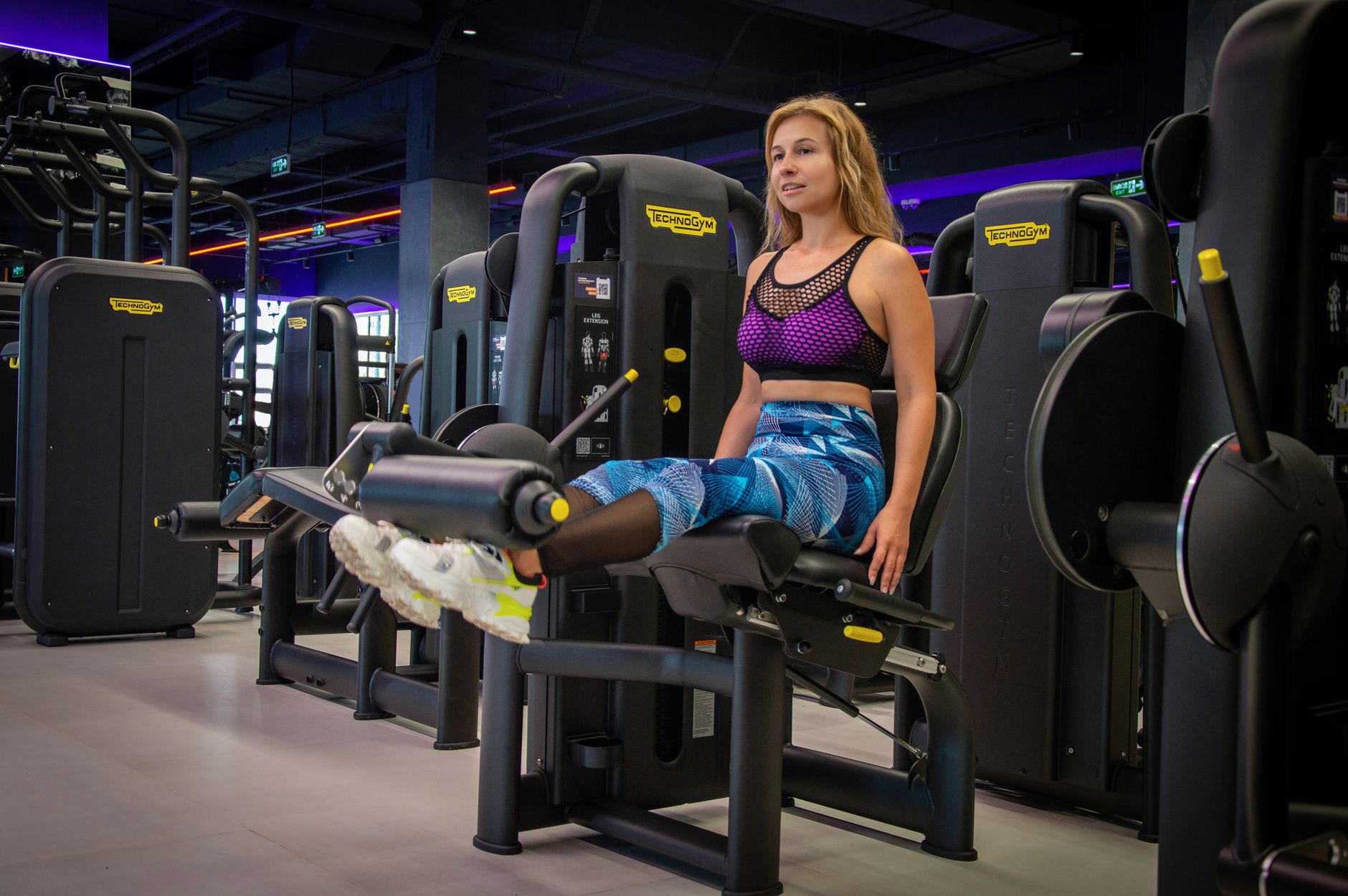
Strength equipment
Strength equipment

Where it started

Four runs a week in the humidity, no strength work because the calendar was already full, and a calf that tightened every third week. The person would rest, feel better, add the missing kilometres back in one go, and lose the next Tuesday. A physiotherapist had already looked at the calf and had not found a tear. The running plan itself was not wild. The week around it was crowded, and the lower leg had nothing underneath it except more running.

What we programmed

One Run Support hour and one quiet strength hour. Calf raises to a slow tempo, three times a week including a short set at home. A hinge that did not irritate the calf: a Romanian deadlift, then a trap-bar pull once the positions were clean. Easy runs were required to stay easy on the day after lifting. We cut one interval session from the outdoor week for the first month, with the runner’s agreement, because stacking a hot track night on a lifting day was how the calf kept arriving. Conditioning indoors sat on the bike so the lower leg could work without another impact session. We wrote the running days into the journal so the floor team would not “make up” missed conditioning on a day that already had kilometres on it.

What changed

Typically the missed weeks thin out before the mileage grows. In this kind of case people keep the same Sunday long run and lose fewer Tuesdays. The calf still speaks on some hot evenings. The difference is that it speaks and then settles, instead of ending the week. We do not claim the pain vanished. We claim the week became something that could hold a plan.

What we’d do differently

We would have asked for the physiotherapist’s note on week one, not week three. The home calf work should have started immediately. Waiting for “the gym habit to settle” cost us a fortnight of easy tissue work we could have had for free.

Shift worker with a 05:00 wake-up

Strength Block · 16 weeks · 2 sessions a week, moving days

Where it started

A roster that rotated, a 05:00 alarm on work days, and a history of joining 07:00 groups that looked good on a planner and then collided with a night shift. Sleep was the scarce resource. Previous gyms had sold a fixed timetable. The person could train. They could not train on the same two mornings every week. They had some lifting history and did not need to be taught a hip hinge from nothing. They needed a room that would move the session rather than mark them absent.

What we programmed

One-to-one, two sessions a week, booked 48 hours ahead against the roster. We wrote a Strength Block that could be run at 06:30 or at 12:15 without changing the lifts, only the conditioning. On short-sleep days the last piece came off. The main work stayed: a squat, a press, a pull. We used the same warm-up so the hour did not depend on which coach had the floor. The journal carried a flag for “short night” so we would not invent a personal record on a Wednesday after a late finish. Week four of each block was already a deload; if a brutal roster week landed there, we let it be even quieter.

What changed

In this kind of case the useful change is attendance. Two sessions a week, most weeks, for four months, is a different life from a group that is missed twice in three. Loads typically move, but more slowly than they would for someone who sleeps eight hours and trains at a fixed dawn. We treat that slower line as correct, not as a lack of character.

What we’d do differently

We would have offered a written “short night” version of the session in week one, instead of deciding on the floor. The coach already knew what to cut. Putting it on paper would have saved a conversation at 06:28.

Returning to training after a long illness

Return to Load · 16 weeks · 2 sessions a week

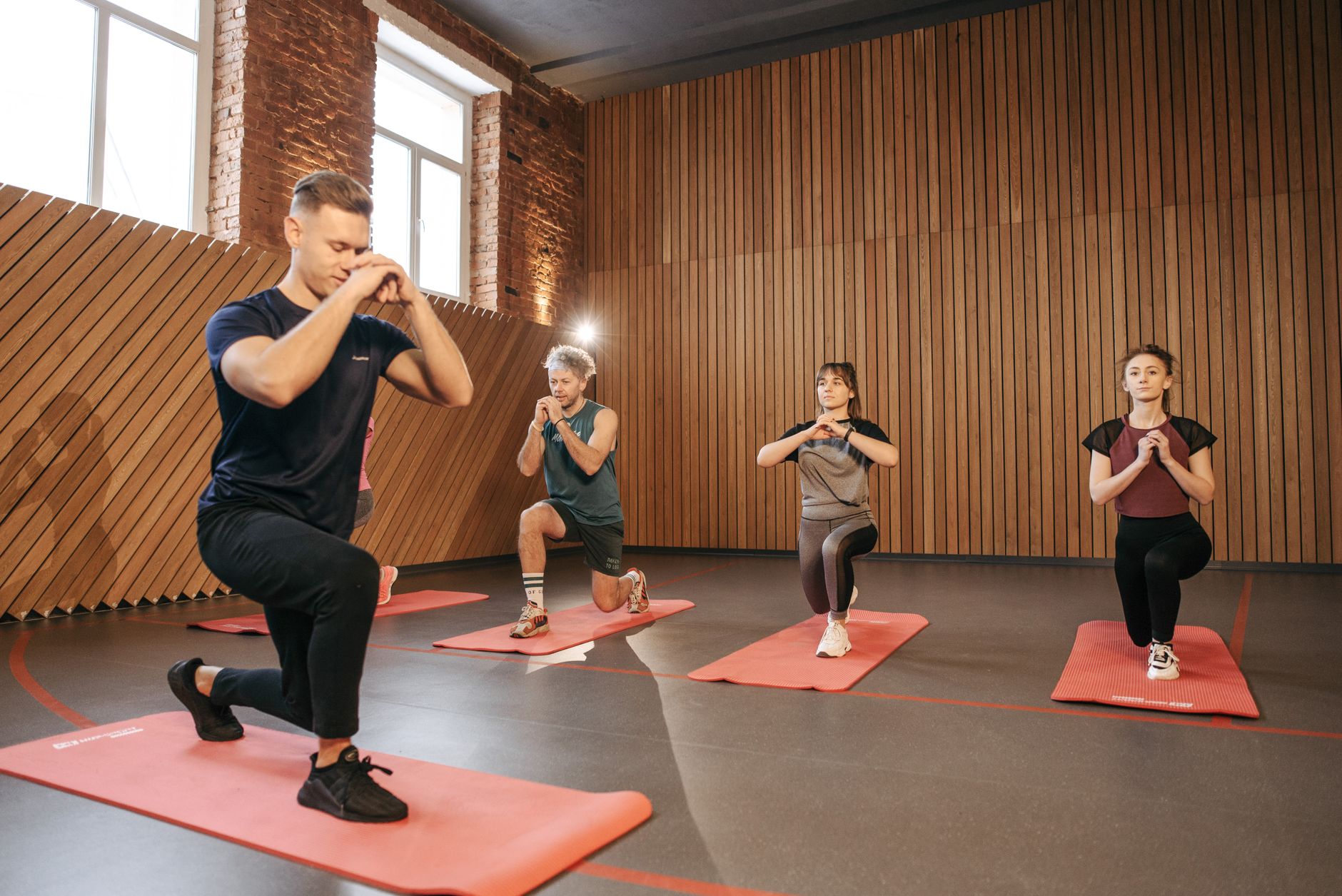
Small group session
Small group session

Where it started

Several months away from any structured training after an illness that had been managed by a doctor. Clearance to return to ordinary activity was in place. Fitness, in the gym sense, was not. Walking a few hundred metres was fine. A flight of stairs was a negotiation. The person was wary of “getting after it” and had already been told, by people who meant well, to listen to their body, which is hard to do when the body has been quiet for a season.

What we programmed

Return to Load, twice a week, with a written note from the clinician on file. Week one was breathing, a sit-to-stand that we could count, a carry with a light kettlebell, and a recumbent-easy bike if the legs asked for it. We progressed range before load. The first hinge was a dowel. The first squat was to a box we could raise. We refused extra sessions in week two when energy felt briefly abundant; that abundance is often a good afternoon, not a new baseline. By week eight there was a goblet squat and a light deadlift from blocks. Conditioning stayed conversational. If a day arrived worse than the last, we repeated the previous session instead of inventing a harder one.

What changed

Typically the useful markers are ordinary: stairs, a full day at a desk, and the ability to take a light load twice a week without losing the following day. In this kind of case people often want a number that proves they are “back”. We keep the journal instead. The loads move. They move slowly. That slowness is the point of the first sixteen weeks.

What we’d do differently

We would have scheduled the block review at week six as well as week eight. The person needed an earlier conversation about how unimpressive the work would look on paper. Waiting until week eight left too much room for private doubt.

Two colleagues training as a pair

Pairs training · 16 weeks · 2 sessions a week

Where it started

Two people from the same office, both able to leave at 18:00 on Tuesdays and Thursdays, both with some lifting history and very different shoulders. They wanted the same hour so they would actually attend. They did not want a bootcamp. One of them had a cranky neck on desk days. The other was happy to pull more than they pressed. Previous attempts at training together had collapsed when a class treated them as one body.

What we programmed

Pairs, two evenings a week. The patterns stayed in the same family: a squat, a hinge, a press, a pull. Loads and stances were individual. The person with the neck used a landmine press while the other worked a dumbbell bench. Deadlifts were a trap bar for one and a conventional bar from a small block for the other. We timed rest off the slower lifter so the hour did not turn into a race. Conditioning was a bike side by side, capped so the neck had nothing extra to do. Each journal column was written separately. When one of them travelled for eight days, the other came as a one-to-one and we charged the difference. We did not invent a solo version of a pairs workout and call it loyalty.

What changed

Attendance is the first thing that usually holds in a pair, which is why people ask for it. Loads move at different speeds, which is fine. The neck-sensitive press typically becomes less of a weekly question once the variation is stable. The useful social fact is that two people keep the same two evenings free. We do not pretend that is a small thing in an office week.

What we’d do differently

We would have written the travel rule in the first e-mail, not at week six. Pairs need the policy before the first flight is booked. We also spent a week trying to keep both people on the same press. That was pride. The landmine should have been there on day one.

Patterns we keep seeing

People often arrive with a plan that assumes a temperate morning and a free lunch hour. The week they actually live has humidity, a late dinner and a message that lands at 21:00. The first job is to write a dose that survives that week, not a dose that looks serious on paper.

Walking is already training for a large share of the people who come through the door. We keep it. Dropping the walks to “make room” for lifting is how the week loses its easiest habit, and the lifting rarely pays that back in month one.

Pain that comes and goes with a sport is often a week-design problem as much as a tissue problem. We still send people to a clinician when that is the right door. We also look at whether two hard pieces are sitting on the same hot afternoon.

Replacements work when the notes are short and factual. They fail when the programme lives in one coach’s head. That is why the journal is not optional, and why we treat a missing note as our mistake rather than a quirk of style.

Book an intro session